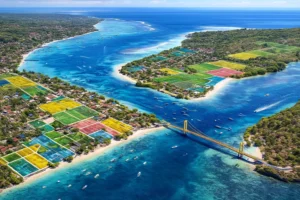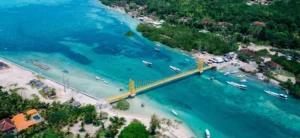
The coastal waters around Nusa Lembongan and Nusa Ceningan hold more than scenic value. Beneath the turquoise waves lies an industry that has sustained the local economy for decades: seaweed farming. For investors and community-partners alike, understanding this subtle but resilient livelihood provides valuable insight into the islands’ real estate and development landscape.
A Tradition Anchored in the Sea
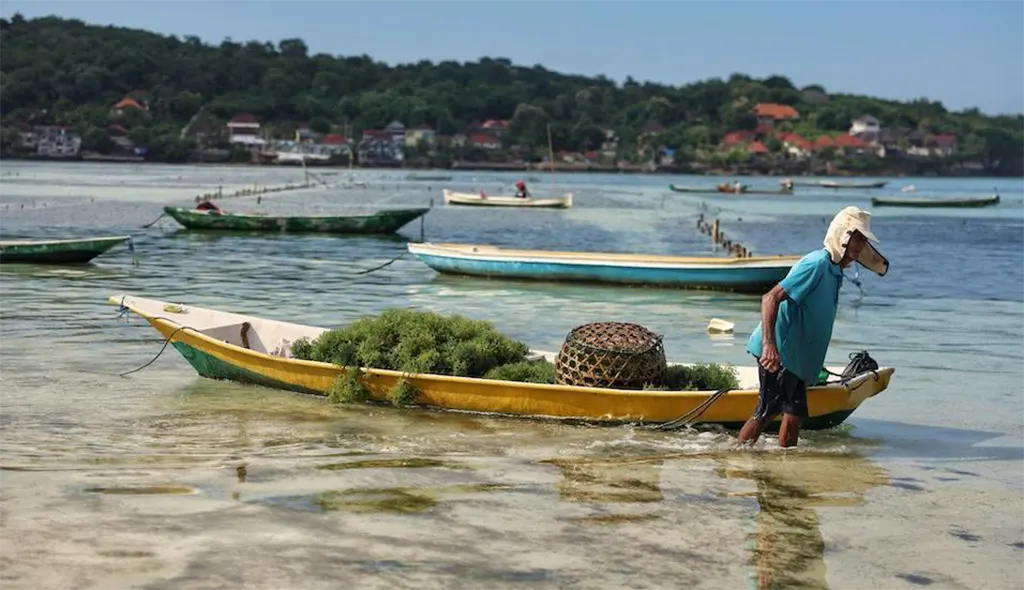
Seaweed cultivation in this region began in earnest in the early 1980s when local families introduced techniques suited to the shallow channels between Lembongan and Ceningan. Known locally as rumput laut, this crop thrives where sunlight, current and shallow seabeds checked all conditions offered by the narrow strait between the two islands.
Over time seaweed farming became woven into local culture. Villages such as Jungut Batu in Nusa Lembongan remain centres of this activity.
The Role in Local Economy and Investment Context
When the tourism market on Bali’s mainland faced disruption, seaweed farming offered a fallback for many island residents. During the pandemic, visitors slowed but seaweed harvesting picked up because local families returned to this labour-intensive yet reliable income source.
From an investment perspective this has several implications:
- The presence of an established livelihood indicates community stability and continuity, which supports property viability.
- It underscores a dual economy model such as tourism + aquaculture which can act as a buffer during market cycles.
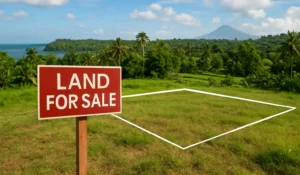
- Land near farming zones can signal deeper community value, but also potential constraints (zones reserved for cultivation, environmental regulation).
Current Challenges and Turning Points
Despite its importance, the seaweed sector is not without risk. Production in some years has dropped due to disease, climate variation and competition for coastal space. Furthermore, as villa and resort development expand on Nusa Lembongan, some traditional farming plots face pressure from rising land values and tourism infrastructure.
However, innovation is visible. Farmers and local entrepreneurs are packaging seaweed culture into visitor experiences: tours of seaweed farms, product lines based on seaweed derivatives and greater community engagement. For real estate investors this signals that development which aligns with local livelihood and culture may gain better social licence and longevity.
Implications for Real Estate & Development
When evaluating property opportunities on Nusa Lembongan and Nusa Ceningan, here are key questions to consider:
- Does the site respect the existing seaweed farming zones and coastal access rights of local communities?
- Can the development integrate aquaculture or marine-heritage elements as differentiators (for example, eco-friendly villas overlooking seaweed plots or visitor activity packages)?
- How will future zoning or coastal-use changes affect the supply of available land adjacent to farming zones? For example, land that competes with farming may face higher regulatory or community barriers.
- Could combining tourism hospitality with aquaculture education or experiential offerings create premium positioning and yield upside?
Bridging Past and FutureFor Nusa Lembongan and Nusa Ceningan the story of seaweed farming is more than historical. It represents the islands’ ability to adapt and co-exist between nature, culture and investment. Investors who recognise this dynamic stand to tap into more than just bricks and mortar as they engage with a rhythm of place.
The islands are more than holiday-rental venues or scenic land banks. They offer a layered story: communities that farm the sea, tourists who arrive to relax and discover, and properties that can bridge those worlds. For those prepared to work with this tide the opportunity stretches well beyond surface value.